

Face Cleanser for Oily Skin: Choose the Right Formula
Table of Contents
- What Makes a Face Cleanser Work for Oily Skin
- Best Face Wash for Oily Skin: Key Ingredients and Formulas
- Gel Cleanser for Oily Skin: Why Lightweight Textures Win
- Salicylic Acid Cleanser for Oily Skin: Active Ingredients That Deliver
- Oil-Free Moisturizer for Oily Skin: Hydration Without the Grease
- How to Use a Cleanser for Oily Skin Without Over-Drying
- Common Mistakes When Cleansing Oily, Acne-Prone Skin
- Frequently Asked Questions
Last Updated: October 11, 2026
What Makes a Face Cleanser Work for Oily Skin
A face cleanser for oily skin is formulated to remove excess sebum, dirt, and impurities without disrupting your skin's natural barrier or leaving a greasy residue. The key difference between a standard cleanser and one designed for oily skin lies in its texture, active ingredients, and how it addresses sebum production.
Oily skin produces excess sebum, which clogs pores and causes breakouts. The right cleanser lifts away excess oil while maintaining hydration, a balance most people get wrong by reaching for harsh, stripping formulas that trigger compensatory oil production.
The most effective cleansers for oily skin combine lightweight textures with targeted active ingredients. Gel or foaming formulas work better than creamy options because they don't leave a film on skin and refresh the complexion without compromising the protective barrier.
The goal is to control oil, not eliminate it. A cleanser that strips too aggressively creates irritation and more breakouts.
Best Face Wash for Oily Skin: Key Ingredients and Formulas
The best face wash for oily skin targets sebum and pore congestion while remaining gentle. The right formula depends on your specific skin concern, acne-prone, sensitive, or combination.
Core Ingredients by Skin Concern
For acne-prone oily skin:
- Salicylic acid (0.5-2%): A beta-hydroxy acid that penetrates pores and dissolves oil and dead skin cells. Start with 0.5-1% if new to actives; advance to 1.5-2% only after your barrier is established.
- Niacinamide (4-5%): Regulates sebum production without stripping, making it ideal when you need oil control but your skin is also reactive or inflamed.
- Azelaic acid (10%): A gentler alternative for sensitive or rosacea-prone acne skin, reducing bacteria and inflammation without the drying potential of BHAs.
For sensitive or newly acne-prone oily skin:
- Gentle surfactants (amino acid-based or plant-derived): Cleanse without disrupting the barrier.
- Glycerin (3-5%): Provides lightweight hydration without grease.
- Centella asiatica or panthenol: Soothe irritation and support barrier repair.
- Fragrance-free formulas: Avoid essential oils and added fragrance, which trigger sensitivity.
For combination oily skin (oily T-zone, normal or dry elsewhere):
- Mild salicylic acid (0.5%) or gentle surfactants: Oil control without over-drying dry areas.
- Hyaluronic acid or glycerin: Lightweight hydration that doesn't worsen shine.
- Avoid charcoal or clay-heavy formulas: These over-dry combination skin.
When to Use Actives vs. Gentle Formulas
If your skin is actively breaking out or inflamed, start with a gentle, fragrance-free cleanser without actives for 1-2 weeks to stabilize your barrier. Then introduce salicylic acid or azelaic acid at 0.5% once daily, preferably at night.
For stable but occasionally congested skin, use a mild salicylic acid cleanser (0.5-1%) twice daily. For severe, persistent acne, consult a dermatologist about higher-strength actives.
If your skin is sensitive, reactive, or you have a compromised barrier (tight, red, or stinging), avoid actives in your cleanser entirely. Use a gentle, hydrating formula and reserve actives for a separate treatment product that you can control more precisely.
Additional Ingredients to Seek and Avoid
Seek:
- Clay or charcoal (1-3%): Absorbs excess oil if balanced with hydrating ingredients.
- Organic botanicals (lavender, green tea, witch hazel extract): Calm irritation and provide antioxidant support, unless you're sensitive to botanicals.
Avoid:
- Heavy oils (coconut, mineral, or silicone-based): These sit on oily skin and worsen congestion.
- Thick emollients (shea butter, lanolin): Not formulated for oily skin and often clog pores.
- Alcohol denat (denatured alcohol): Strips skin and triggers compensatory oil production.
- Fragrance or essential oils: Even "natural" fragrance can irritate acne-prone skin and trigger inflammation.
Texture and Formulation Type
Water-based and gel formulas absorb quickly without residue. Foaming cleansers lift away oil and impurities effectively, but should leave skin comfortable and hydrated, not tight.
Cream or milk cleansers are generally not recommended for oily skin unless you have combination skin with very dry patches, in which case a lightweight milk formula designed for combination skin may work.
Gel Cleanser for Oily Skin: Why Lightweight Textures Win
A gel cleanser for oily skin outperforms creamy formulas because its lightweight, water-based texture absorbs quickly and rinses clean without residue.
Gel formulas deliver cleansing power in a weightless texture that dries quickly, unlike heavy cream cleansers that add residue.
Look for gel cleansers labeled "oil-free" and designed specifically for oily or combination skin types. These formulas are engineered to control shine and purify pores without the heavy feel of traditional cream cleansers. Your skin should feel refreshed after cleansing, not stripped or greasy.
Salicylic Acid Cleanser for Oily Skin: Active Ingredients That Deliver
A salicylic acid cleanser for oily skin targets the root cause of breakouts: clogged pores filled with oil and dead skin cells. Salicylic acid is a beta-hydroxy acid (BHA) that dissolves oil inside pores, making it the most effective active ingredient for oily, acne-prone skin.
Salicylic acid penetrates pores and exfoliates from inside out, removing buildup that causes blackheads, whiteheads, and breakouts without the irritation of physical scrubs.
Concentrations of 0.5-2% are most effective. Lower concentrations (0.5-1%) suit sensitive skin; higher concentrations (1.5-2%) deliver stronger results but may cause dryness if your barrier is compromised.
The AcneologyHQ™ Purifying Toner includes salicylic acid to address excess oil and pore congestion, removing remaining impurities after washing.

Start with salicylic acid products once daily, preferably at night, and gradually increase frequency as your skin adapts. If you experience irritation, redness, or excessive dryness, reduce frequency or switch to a lower concentration.
Oil-Free Moisturizer for Oily Skin: Hydration Without the Grease
An oil-free moisturizer for oily skin provides essential hydration without adding shine or clogging pores. Many skip moisturizer thinking oily skin doesn't need it, a critical mistake.
Skipping moisturizer backfires: dehydrated skin produces more oil. An oil-free moisturizer prevents this by delivering lightweight hydration your skin absorbs quickly.
Look for moisturizers with these characteristics:
- Gel or lightweight lotion texture: Absorbs fast and doesn't sit on skin
- Water-based formulas: Hydrate without adding oil
- Non-comedogenic: Won't clog pores or trigger breakouts
- Humectants like glycerin or hyaluronic acid: Draw moisture into skin without grease
Oil-free doesn't mean moisturizer-free. A good oil-free moisturizer keeps your complexion balanced, reduces irritation, and prevents sebum overproduction.
Apply your oil-free moisturizer to damp skin right after cleansing. This locks in hydration and helps your skin feel comfortable throughout the day.
How to Use a Cleanser for Oily Skin Without Over-Drying
Using a cleanser correctly makes the difference between clear skin and irritated skin. Over-cleansing or using hot water strips your barrier, leading to more breakouts and sensitivity.
Proper Cleansing Technique
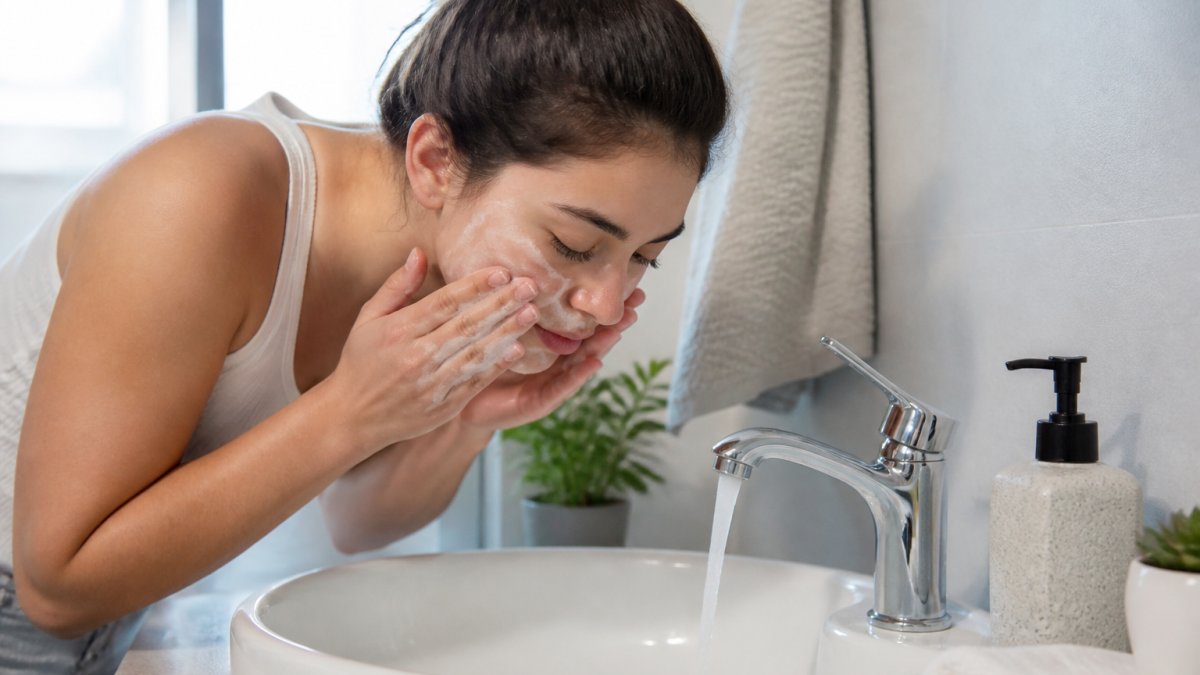
Follow these steps for optimal results:
-
Use lukewarm water, not hot water. Hot water strips your skin and triggers more oil production. Lukewarm water (around 90-100°F) opens pores gently without damaging your barrier.
-
Apply cleanser to damp skin. Apply a dime-sized amount and massage gently in circular motions for 30-60 seconds, focusing on your T-zone. Avoid aggressive scrubbing.
-
Rinse thoroughly. Use lukewarm water to rinse away all cleanser residue. Any leftover product can irritate your skin or leave a film. Rinse at least 5-10 times to ensure complete removal, especially if you used a foaming or clay-based formula.
-
Pat dry gently. Use a clean, soft towel; avoid reusing towels.
-
Apply moisturizer immediately. Apply your oil-free moisturizer while your skin is still slightly damp. This helps lock in hydration and prevents your skin from compensating with excess oil production.
Cleansing Frequency and Adjustment
Cleanse twice daily unless your skin becomes irritated. If you experience tightness, redness, or dryness after 1-2 weeks, reduce to once daily at night, when your skin repairs most actively.
If you exercise or sweat heavily, you may rinse your face with lukewarm water alone (no cleanser) after working out, then follow with a full cleanse at night. This removes sweat and bacteria without over-cleansing.
How to Assess Whether Your Cleanser Is Working
Clear skin takes time. Most people see noticeable improvement after 4-6 weeks of consistent use with the right products. However, you should notice immediate changes within the first 1-2 weeks that signal the cleanser is working:
Signs your cleanser is working:
- Skin feels clean and refreshed without tightness.
- Oil production decreases by midday.
- Pores appear smaller within 2-3 weeks.
- Breakouts reduce in frequency or severity after 4-6 weeks.
- Skin feels hydrated and comfortable.
- Fewer blackheads or whiteheads, especially on your T-zone.
Signs your cleanser is too harsh:
- Skin feels tight or "squeaky clean."
- Redness, stinging, or burning occurs.
- Flaking or visible irritation within 3-5 days.
- Oil production increases dramatically.
- Breakouts worsen or appear in new areas.
- Skin feels dry even after moisturizing.
- Sensitivity to other products develops.
If you notice over-drying or irritation, stop using the cleanser immediately and switch to a gentler formula. A compromised barrier takes 2-4 weeks to repair.
Realistic Expectations and Timeline
Weeks 1-2: Feel an immediate difference (cleaner, less greasy), but visible changes aren't apparent yet.
Weeks 3-4: Pores appear smaller; oil control improves. Existing breakouts may flatten.
Weeks 5-8: Breakout frequency decreases and texture improves. If no improvement by week 6, the cleanser may not be right for you.
Beyond 8 weeks: Consult a dermatologist; you may need a stronger active or different approach.
When to Switch or Add Products
Don't switch cleansers more than once every 4-6 weeks. If a cleanser isn't working after 6-8 weeks, switch to a different active ingredient or concentration.
If you're using a salicylic acid cleanser and your skin is stable but not completely clear, consider adding a separate treatment product (like a salicylic acid toner or spot treatment) rather than upgrading to a stronger cleanser. This allows you to control the strength and frequency of the active ingredient more precisely.
Common Mistakes When Cleansing Oily, Acne-Prone Skin
Most people sabotage their skin by making one of these common mistakes.
Over-cleansing: Washing more than twice daily or using multiple cleansing products strips your skin and damages your barrier.
Using water that's too hot: Hot water opens pores excessively and strips natural oils, signaling your skin to produce more sebum as compensation.
Scrubbing aggressively: Physical scrubs and harsh rubbing irritate acne-prone skin and spread bacteria.
Skipping moisturizer: Oily skin still needs hydration. Skipping moisturizer causes your skin to produce even more oil to compensate.
Using the wrong cleanser texture: Creamy or heavy cleansers leave residue on oily skin and often worsen breakouts.
Mixing too many actives: Using multiple exfoliating products simultaneously (salicylic acid cleanser + acid toner + retinol) damages your barrier and causes irritation.
Expecting overnight results: Clear skin takes time. Most people see noticeable improvement after 4-6 weeks of consistent use with the right products.
The right face cleanser for oily skin balances oil control with barrier protection. Our Purifying Toner combines salicylic acid with soothing organic ingredients to refresh your complexion and maintain clear skin. Shop All and discover how our science-backed, non-comedogenic formulas support your journey to clearer, more radiant skin.
Frequently Asked Questions
What should you look for in a face cleanser for oily skin?
Look for lightweight, water-based formulas that remove excess oil and impurities without stripping your skin. Gel or foaming cleansers work better than creamy ones for oily skin. Ingredients like salicylic acid help unclog pores, while soothing compounds protect your skin barrier. Avoid heavy oils and occlusive ingredients that trap moisture. Choose products labeled oil-free and non-comedogenic to prevent breakouts.
Is a gel or foaming cleanser better for oily skin?
Both gel and foaming cleansers are effective for oily skin because they're lightweight and remove excess sebum without leaving residue. Gel cleansers tend to be slightly more hydrating, making them better if your skin feels tight after washing. Foaming cleansers provide a deeper cleanse and a more refreshing feel. Choose based on your preference, but ensure the formula includes soothing ingredients to prevent irritation and maintain your skin barrier.
How often should you wash oily skin?
Wash oily skin twice daily: once in the morning to remove overnight oil buildup and once at night to clear dirt, impurities, and makeup. Avoid over-washing, which can trigger your skin to produce even more oil as a defense response. If your skin feels tight or irritated, reduce to once daily and focus on a gentle cleanser. Always follow with a lightweight, oil-free moisturizer to maintain hydration and skin balance.
Can a face cleanser reduce excess oil without drying out your skin?
Yes, the right cleanser can control shine and sebum while preserving hydration. Look for formulas with salicylic acid to unclog pores and purifying ingredients like lavender flower water to refresh skin. Avoid harsh, stripping cleansers that damage your skin barrier and cause rebound oil production. Follow cleansing with an oil-free moisturizer to restore hydration. A balanced routine prevents the tight, uncomfortable feeling that comes from over-drying.
How to Establish Simple Acne Routines for Acne-Free Skin
What Hormonal Pimples Look Like: A Visual Guide
Related Posts

FAQs: Managing Acne-Prone Skin and Preventing Clogged Pores

7 Benefits of Oil-Free Moisturizer for Oily Skin

Best Sebum Control & Shine Banishers for Skin Barrier Repair

Exploring Historical Breakthroughs in Adult Acne Control

A Persuasive Argument for Adopting Acne Safe Practices

How to Moisturize Acne-Prone Skin: A Step-by-Step Guide


