

How to Moisturize Acne-Prone Skin: A Step-by-Step Guide
Table of Contents
- Why Moisturizing Acne-Prone Skin Matters
- Step-by-Step: How to Moisturize Acne-Prone Skin
- How to Find the Best Moisturizer for Acne-Prone Skin
- Why a Non-Comedogenic Moisturizer for Acne Is Non-Negotiable
- How Often to Moisturize Acne-Prone Skin
- Using a Moisturizer With Acne Treatment Without Overdrying
- Troubleshooting: When a Moisturizer Seems to Cause Breakouts
- Conclusion
- Frequently Asked Questions
Last Updated: October 18, 2026
Why Moisturizing Acne-Prone Skin Matters
Most people with breakouts assume moisturizer makes things worse. That instinct is understandable, and it is also the reason so many routines backfire.
At AcneologyHQ™, we see this pattern constantly. Someone starts a drying treatment, skips hydration to "dry out" the pimple, and ends up with tight, flaky skin by midday. The skin barrier weakens. Irritation climbs.
Moisturizing acne-prone skin is the step that breaks that loop. According to the American Academy of Dermatology's guidance on acne skin care, gentle cleansing and consistent moisturizing are standard parts of an acne routine, not optional extras.
The trick is picking the right formula and applying it in the right order. Below, we show you exactly how to do both.
Step-by-Step: How to Moisturize Acne-Prone Skin
The right order is cleanse, treat, moisturize, then protect. Moisturizer goes on after water-based treatments but before sunscreen in the morning, because it seals in hydration and buffers the drying effect of acne actives.
Here is the full routine, step by step, with timing that matters.
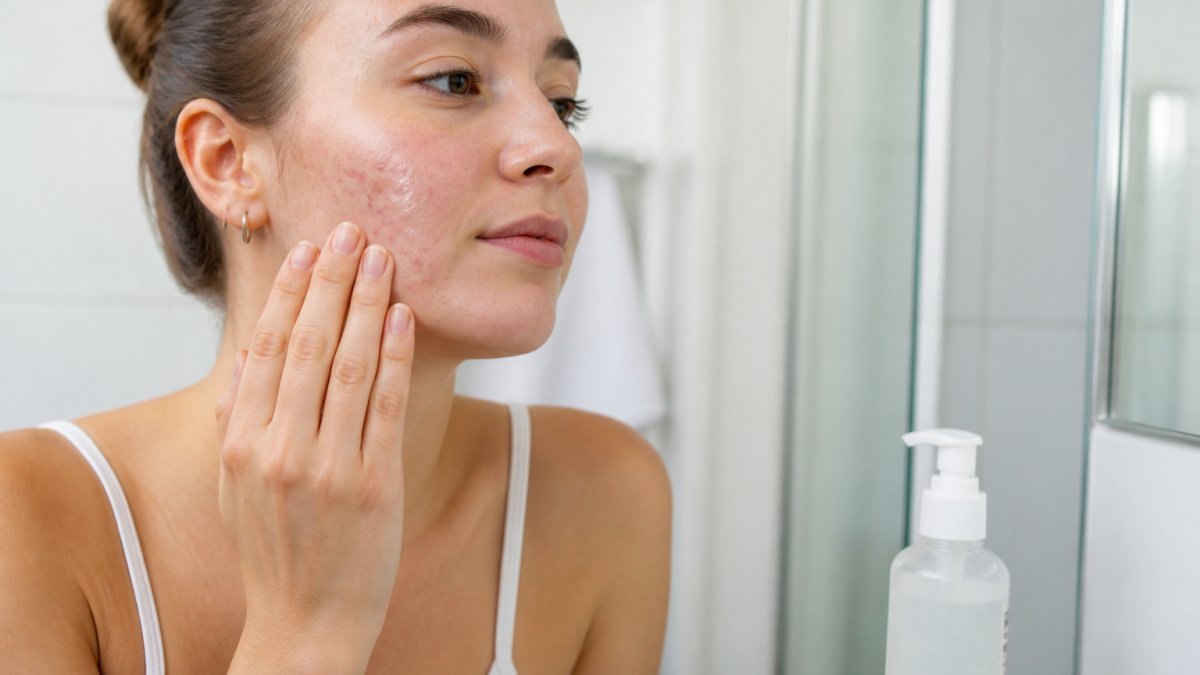
Step 1: Cleanse Gently and Leave Skin Damp
Start with a mild, fragrance-free cleanser and lukewarm water. Harsh scrubs and hot water strip the barrier and leave skin tight, which triggers more oil later. Pat dry with a clean towel but leave skin slightly damp. Applying moisturizer to damp skin helps lock in moisture and improves spreadability, so you use less product for the same coverage.
Step 2: Apply Water-Based Treatments First
If you use a water-based treatment such as salicylic acid or niacinamide, apply it first to clean, damp skin and let it absorb for about one to two minutes. This order lets the active do its job before the moisturizer creates a barrier. For benzoyl peroxide, apply a thin layer to affected areas only, then wait a minute before moisturizing to reduce the chance of pilling and irritation.
Step 3: Moisturize While Skin Is Still Slightly Damp
Apply your moisturizer within about a minute of cleansing or after your water-based treatment absorbs. Use a pea-sized amount for the whole face and press it in gently rather than rubbing. If your skin is sensitive or you use a retinoid at night, apply moisturizer first as a buffer, wait a few minutes, then apply the treatment on top. This buffering approach is common among dermatologists for reducing retinoid irritation.
Step 4: Finish With Sunscreen in the Morning
In the morning, sunscreen goes last, after moisturizer. Use a broad-spectrum sunscreen with SPF 30 or higher and apply about a nickel-sized amount for the face and neck. Many acne treatments increase sun sensitivity, so this step is not optional. At night, skip sunscreen and use a slightly richer layer of moisturizer if your skin tolerates it.
Step 5: Repeat Morning and Night, and After Sweating
Use moisturizer twice a day, morning and night, and again after any workout or heavy sweating. If you shower after exercise, cleanse gently and moisturize while skin is still damp. Consistency matters more than quantity, and one well-chosen formula applied consistently does more than layering multiple products.
A Simple Order to Remember
Morning: cleanser → water-based treatment or serum → moisturizer → sunscreen. Night: cleanser → treatment (or moisturizer first if buffering) → moisturizer. If you use both benzoyl peroxide and salicylic acid, alternate them on different nights rather than layering, and keep moisturizer as the final step before sunscreen or bedtime.
How to Find the Best Moisturizer for Acne-Prone Skin
The best moisturizer for acne-prone skin is lightweight, oil-free, and labeled non-comedogenic. Those three traits do most of the work. Everything else is preference.
Look for water-based formulas and gel or fluid textures. They absorb fast and feel breathable, which matters if you have oily or combination skin.
Ingredient checklist:
- Hyaluronic acid and glycerin for hydration and moisture retention
- Niacinamide for oil control and barrier support
- Aloe vera for soothing irritation
- Ceramides or similar barrier-supporting ingredients if skin feels raw
- No added fragrance if your skin is reactive
A common mistake is buying a rich night cream because skin feels dry, then wondering why breakouts return.
Our Oil-Free Hydrating Gel is built for exactly this balance. It uses hyaluronic acid, betaine, and watercress extract for lasting hydration, with organic aloe to calm redness.

Why a Non-Comedogenic Moisturizer for Acne Is Non-Negotiable
A non-comedogenic moisturizer for acne is one formulated not to clog pores. That label is the single most useful filter when you shop, because pore-clogging ingredients are the fastest way to undo a good routine.
Some ingredients that feel luxurious can trigger problems on breakout-prone skin. Heavy oils, thick butters, and occlusive balms are common culprits for people who are prone to clogged pores. That does not mean these ingredients are bad for everyone. It means they are a risk if your skin clogs easily.
What to check on the label:
- The words "non-comedogenic" or "won't clog pores"
- Water listed first in the ingredients
- No heavy oils near the top of the list
- "Oil-free" if you have oily or combination skin
How Often to Moisturize Acne-Prone Skin
Twice daily is the standard answer: once in the morning and once at night. That schedule keeps the barrier supported without overloading skin with product.
Adjust from there based on how your skin feels:
- Oily skin: twice daily with a gel or fluid formula
- Combination skin: twice daily, lighter in the morning, slightly richer at night
- Dry or irritated skin: twice daily, plus a thin layer after workouts
- Winter or dry climates: you may need a slightly richer formula at night
More product is not better. Layering three moisturizers does not repair the barrier faster. One well-chosen formula applied consistently does more than a shelf full of products.
Using a Moisturizer With Acne Treatment Without Overdrying
A moisturizer with acne treatment works best when the two are paired deliberately, not stacked carelessly. The goal is to get the treatment's benefit while keeping dryness and irritation in check. The right pairing depends on which active you use and how reactive your skin is.
Match the Moisturizer to Your Active
- Retinoids (tretinoin, adapalene, tazarotene): These can cause peeling and stinging in the first weeks. Use a gentle, fragrance-free moisturizer with ceramides or niacinamide, and consider the moisturizer-first buffer method: cleanse, moisturize, wait a few minutes, then apply a pea-sized amount of retinoid. Start with two nights per week and increase only when skin stops stinging.
- Benzoyl peroxide: Expect dryness and possible bleaching of fabrics. Use a lightweight, oil-free gel or lotion and apply benzoyl peroxide to affected areas only, then moisturize after it absorbs. If skin feels tight, reduce frequency to every other night rather than adding a heavier cream.
- Salicylic acid: This beta hydroxy acid is less drying than retinoids for many people but can still irritate. A gel moisturizer with hyaluronic acid or glycerin fits well after a salicylic acid toner or cleanser. Avoid layering salicylic acid with other exfoliating acids on the same night.
- Azelaic acid: Often better tolerated but can cause tingling. A simple lotion with niacinamide or aloe can soothe without adding pore-clogging ingredients.
Adjust by Skin Type and Sensitivity
- Oily skin: Choose a gel or fluid labeled oil-free and non-comedogenic. Apply twice daily; if skin feels greasy, use a smaller amount rather than skipping.
- Combination skin: Use a lighter gel in the morning and a slightly richer lotion at night if the cheeks feel dry.
- Dry or sensitive acne-prone skin: A lotion with ceramides, glycerin, or squalane (if tolerated) can support the barrier. Patch test first, and introduce one new product at a time.
Practical Rules That Prevent Overdrying
- Start new actives slowly, every other night, and moisturize after each use.
- Use a buffer layer of moisturizer before the treatment if skin stings.
- Skip the treatment on days when skin is flaky or raw, but keep moisturizing.
- Do not combine multiple strong actives in the same routine; alternate nights instead.
- If irritation lasts more than a week or worsens, stop the active and see a dermatologist.
If you use benzoyl peroxide, a lightweight, oil-free moisturizer offsets dryness without adding grease. If you use salicylic acid, our Purifying Toner pairs salicylic acid with soothing lavender flower water and hydrating glycerin to clear pores and soothe while adding a touch of moisture, so it fits neatly before your gel.

The National Institute of Arthritis and Musculoskeletal and Skin Diseases overview of acne notes that acne treatments can cause dryness and irritation, which is why gentle skin care alongside treatment matters.
Troubleshooting: When a Moisturizer Seems to Cause Breakouts
If a new moisturizer seems to cause breakouts, stop and check three things before blaming the product. First, confirm it is non-comedogenic and oil-free.
A patch test settles most of this. Apply a small amount behind your ear or along your jaw for three to five nights before using it on your whole face.
Some breakouts are not product-related at all. Hormonal cycles, stress, and sweat can all trigger flares that have nothing to do with your moisturizer. If irritation persists for weeks despite a gentle, non-comedogenic routine, see a dermatologist.
Conclusion
Getting hydration right is the step that makes the rest of an acne routine work. The formula is simple: cleanse gently, treat, then moisturize with a lightweight, non-comedogenic product twice a day.
We built AcneologyHQ™ around this exact approach. Our physician-curated, oil-free formulas are made to hydrate without clogging pores. The Clear + Hydrate Duo pairs our Purifying Toner with the Oil-Free Hydrating Gel for a complete daily routine, and the two-month bundle keeps it going.

Ready to simplify your routine? Shop All and start with hydration that works with your acne treatment, not against it.
Frequently Asked Questions
Can moisturizer make acne worse?
Yes, if the formula is heavy, oil-based, or contains pore-clogging ingredients. A moisturizer that sits on top of the skin and traps oil can contribute to clogged pores and new blemishes. That is why a non-comedogenic moisturizer for acne is essential. Look for water-based, oil-free formulas with ingredients like hyaluronic acid and glycerin, and avoid thick creams or heavy oils if you are breakout-prone.
Should I moisturize if I have oily, acne-prone skin?
Yes. Oily skin still loses water, and skipping moisturizer can push oil production higher as the skin tries to compensate. The key is choosing lightweight, non-greasy hydration. A gel or fluid texture absorbs quickly and supports the skin barrier without adding shine. Apply it morning and night after cleansing, and you will likely find your skin feels less tight and looks less oily over time.
How often should I moisturize acne-prone skin?
Twice a day, morning and night, is the standard. Apply moisturizer after cleansing and after any acne treatments have absorbed. If your skin is very oily, a light gel in the morning and a slightly richer lotion at night can work well. If you use drying actives like benzoyl peroxide or salicylic acid, you may need to moisturize more often or switch to a barrier-supporting formula to prevent irritation.
How do I apply moisturizer alongside acne treatments?
Cleanse first, then apply your acne treatment and let it absorb for a minute or two. Follow with moisturizer to lock in hydration and reduce dryness. If your treatment is a leave-on gel or cream, apply moisturizer over it. If you use a spot treatment, moisturize the rest of your face normally and apply the spot treatment last. This order helps active ingredients work while keeping the skin barrier supported.
What Hormonal Pimples Look Like: A Visual Guide
A Persuasive Argument for Adopting Acne Safe Practices
Related Posts

FAQs: Managing Acne-Prone Skin and Preventing Clogged Pores

7 Benefits of Oil-Free Moisturizer for Oily Skin

Best Sebum Control & Shine Banishers for Skin Barrier Repair

Exploring Historical Breakthroughs in Adult Acne Control

A Persuasive Argument for Adopting Acne Safe Practices

What Hormonal Pimples Look Like: A Visual Guide


