

How to Repair Skin Barrier Acne: A Step-by-Step Guide
Table of Contents
- Why a Damaged Skin Barrier Makes Acne Worse
- Signs of a Compromised Skin Barrier You Should Not Ignore
- Step 1: Stop the Damage and Pause Active Ingredients
- Step 2: Build a Skin Barrier Repair Routine for Acne-Prone Skin
- Ingredients That Repair the Skin Barrier (and What to Avoid)
- How Long Does Skin Barrier Repair Take? A Realistic Timeline
- When to See a Dermatologist for Persistent Acne and Irritation
- Frequently Asked Questions
Last Updated: October 14, 2026
Why a Damaged Skin Barrier Makes Acne Worse
Learning how to repair skin barrier acne starts with one fact: to repair skin barrier damage and breakouts are linked. The skin barrier is the thin outer layer that locks in water and keeps irritants out. When it breaks down, skin loses moisture, germs slip in, and acne gets worse.
How Barrier Damage and Acne Breakouts Feed Each Other
The cycle is simple once you see it.
- A damaged skin barrier lets water escape, so skin turns dry and tight.
- Dry skin pumps out more oil to cope, which clogs pores.
- Clogged pores become acne breakouts.
- Harsh acne treatment strips the barrier again, and the loop restarts.
This is why so many routines backfire. The harder you fight acne, the more irritation you create. Barrier function and clear skin rise and fall together.
Dermatologists describe this as a moisture barrier problem, not just a pimple problem. Fixing the barrier is the first step in any real acne plan.
Signs of a Compromised Skin Barrier You Should Not Ignore
The signs of a compromised skin barrier are easy to spot once you know them. Watch for redness, stinging, tightness, flaking, and a shiny-but-dry look. Products that once felt fine may suddenly burn. Breakouts may spread to areas that were clear before.
Acne or Barrier Irritation? A Simple Decision Tree
Use this quick check to tell the two apart:
- Is your skin red, stinging, or tight after washing? That points to barrier irritation.
- Are you seeing deep, tender bumps in the same spots? That leans toward true acne.
- Did breakouts start or worsen after a new active? That is barrier damage from over-exfoliation.
- Is your skin both oily and flaky at once? That is a classic dehydration sign.
If you check two or more irritation signs, pause your actives first. Treat the barrier, then return to acne care.
Step 1: Stop the Damage and Pause Active Ingredients
Step one is to stop the harm. Pull back on strong actives for one to two weeks. This means pausing retinoids, high-strength acids, and abrasive scrubs. Over-exfoliation is one of the most common causes of a damaged skin barrier.
Which Actives to Pause, Taper, or Keep
Not every active needs the same response. Use this triage:
- Pause completely: prescription retinoids (tretinoin, adapalene 0.3%), over-the-counter retinol and retinal, AHA peels (glycolic, lactic, mandelic), BHA leave-on liquids above 1%, benzoyl peroxide above 2.5%, and any physical scrub or cleansing brush.
- Taper down: if you use a low-strength BHA (0.5-1%) or a 2.5% benzoyl peroxide spot treatment, cut frequency to once or twice a week on a single small area rather than quitting cold.
- Keep: a gentle non-foaming cleanser, a ceramide moisturizer, and broad-spectrum sunscreen. These are non-negotiable during the pause.
How to Reintroduce Acne Treatments Safely
Once stinging, tightness, and flaking are gone for at least five consecutive days, reintroduce one active at a time using this sequence:
- Week 1 of reintroduction: apply the active once every third night, buffered over moisturizer (moisturizer first, active second).
- Week 2: move to every other night if there is no stinging, redness, or new flaking.
- Week 3: move to nightly only if skin stays calm for the full two weeks.
- Add the next active only after the first one has been tolerated at full frequency for two weeks. Never stack two new actives in the same week.
Start with the active that targets your primary concern. For most acne-prone readers that means benzoyl peroxide or a low-strength BHA first, and retinoids last, because retinoids are the most likely to re-trigger irritation.
Swap harsh steps for these during the pause:
- A gentle cleanser with lukewarm water
- A simple moisturizer, morning and night
- Sunscreen every day, no exceptions
Do not add new products during this pause. The goal is calm, not more change. If you use a spot treatment, keep it to one small area.
When Pausing Is Not Enough
If you have deep, tender cysts, nodules, or scarring, do not manage them with a barrier pause alone. Those lesions can scar permanently while you wait. Keep the barrier routine and ask a dermatologist about prescription options that work without stripping the surface, such as topical antibiotics, oral antibiotics for short courses, or isotretinoin for severe cases.
Step 2: Build a Skin Barrier Repair Routine for Acne-Prone Skin
A good skin barrier repair routine for acne-prone skin keeps things short. Fewer steps mean less chance of product irritation. The routine below uses mild cleansing, hydration, and barrier-supporting ingredients only.
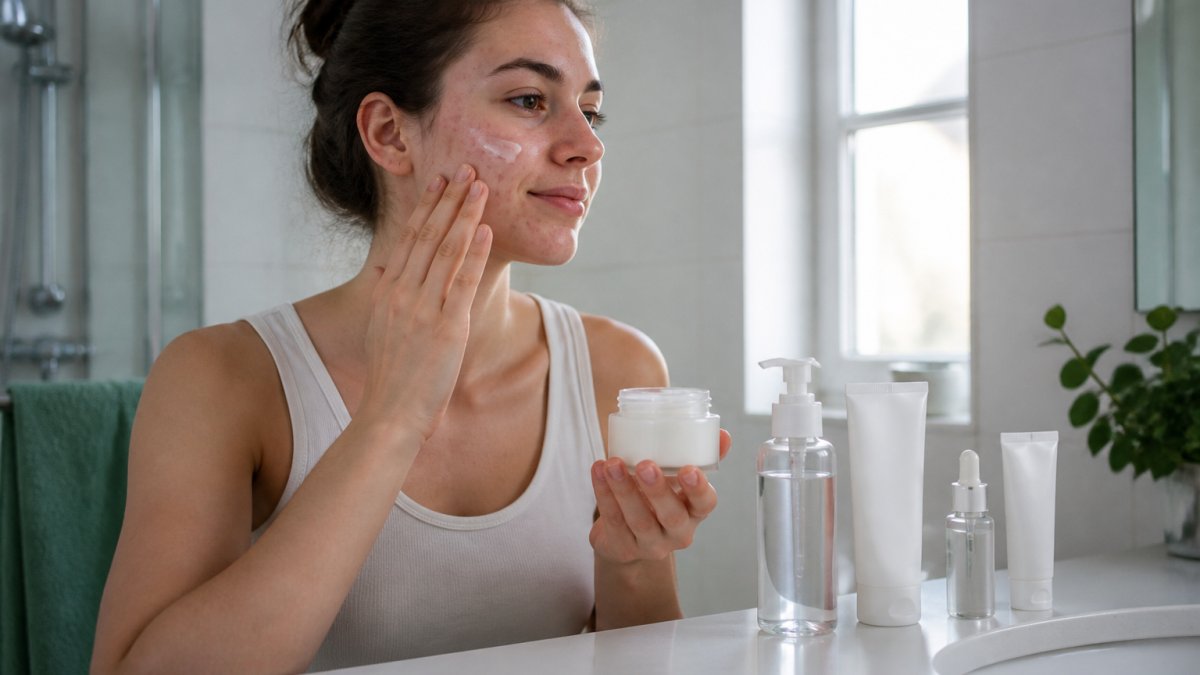
Our American Academy of Dermatology skin care guidance stresses gentle cleansing and daily sun protection for acne-prone skin.
Morning Routine: Cleanse, Hydrate, Protect
- Cleanse with a non-stripping cleanser and tepid water.
- Hydrate with a lightweight moisturizer or hydrating serum.
- Protect with a broad-spectrum sunscreen, SPF 30 or higher.
Skip the toner if it stings. Keep it to three steps.
Evening Routine: Repair and Rebuild Overnight
- Cleanse again with the same gentle cleanser.
- Treat only if skin is calm, using one active at low strength.
- Moisturize with a richer cream to seal in hydration.
Night is when barrier repair does its best work. Give skin the tools and let it rest.
Ingredients That Repair the Skin Barrier (and What to Avoid)
The ingredients that repair the skin barrier fall into a few clear groups. Look for ceramides, fatty acids, and cholesterol. These are the essential lipids skin needs to rebuild its surface. Add panthenol, also called vitamin B5, plus niacinamide and hyaluronic acid for hydration.
| Ingredient | What It Does | Best For |
|---|---|---|
| Ceramides | Rebuild the lipid barrier | Dry, flaky skin |
| Fatty acids | Seal in moisture | Tight, irritated skin |
| Panthenol (B5) | Calm redness, hold water | Sensitive skin |
| Niacinamide | Ease redness, balance oil | Oily, acne-prone skin |
| Hyaluronic acid | Pull in hydration | Dehydrated skin |
What to avoid while repairing:
- Abrasive scrubs and cleansing brushes
- Alcohol-heavy toners
- Stacking multiple active ingredients at once
Our National Institutes of Health overview of niacinamide in skin care notes its role in calming inflammation and supporting the barrier.
How Long Does Skin Barrier Repair Take? A Realistic Timeline
Most people see real improvement in two to four weeks. Full barrier repair often takes four to eight weeks. The timeline depends on how much damage you caused, how consistent you are, and whether you keep reintroducing actives too early.
There are two clocks running at once. Surface recovery, the stinging, tightness, and flaking, usually resolves in one to two weeks. Full barrier recovery, the lipid matrix rebuilding enough to tolerate actives again, takes four to eight weeks, and longer if you have been over-exfoliating for months.
Week-by-Week Checkpoints
- Week 1: Less stinging and tightness after cleansing. Some flaking may increase briefly as dead surface cells shed. If stinging gets worse, your cleanser or moisturizer is the culprit, simplify further.
- Week 2: Redness fades, flaking drops, and skin no longer feels tight within five minutes of washing. This is the earliest safe point to consider reintroducing one active.
- Week 4: Skin feels comfortable, oil is more balanced, and makeup sits without patchiness.
- Week 6: If redness and breakouts are both improving, you are on track. If breakouts are unchanged or worse, the problem may not be barrier damage alone.
- Week 8: Barrier is stronger; you can slowly reintroduce a second active if the first is fully tolerated.
What to Do If You Plateau
A plateau at week three or four is common and usually means one of three things:
- A hidden irritant is still in the routine. Check cleansers for fragrance, essential oils, and high alcohol content; check sunscreens for high alcohol denat.
- You reintroduced actives too fast. Drop back to the last frequency that felt calm and hold there for two weeks.
- The breakouts are not barrier-driven. If you have deep, tender bumps in the same spots with no redness or stinging, that pattern points to true acne rather than irritation, and a barrier-only routine will not clear it.
When to Reassess With a Professional
See a dermatologist if symptoms last more than eight weeks, get worse despite a simplified routine, or include deep painful cysts, sudden scarring, or irritation that spreads beyond the face. A doctor can rule out rosacea, perioral dermatitis, seborrheic dermatitis, and contact dermatitis, conditions that mimic barrier damage and acne but need different treatment.
Reintroduce actives one at a time, at low strength, every few days. If irritation returns, stop and wait a week before trying again at a lower frequency.
When to See a Dermatologist for Persistent Acne and Irritation
See a dermatologist if symptoms last more than eight weeks or get worse. Also seek care for deep, painful cysts, sudden scarring, or irritation that spreads. A doctor can rule out other causes and adjust your treatment.
For everyday barrier support, our Oil-Free Hydrating Gel uses hyaluronic acid, betaine, and watercress extract to hydrate without oil. Our Purifying Toner pairs salicylic acid with soothing lavender water to clear pores without stripping skin. Both are non-comedogenic and made for oily, acne-prone skin.


Frequently Asked Questions
Can a damaged skin barrier cause acne or make breakouts worse?
Yes. When the skin barrier is compromised, moisture escapes and irritants enter more easily. This triggers inflammation, redness, and excess oil production that can clog pores and worsen acne breakouts. A damaged barrier also makes skin more reactive to acne treatments, creating a cycle where irritation leads to more breakouts. Repairing the barrier while gently managing acne is essential for clearer skin.
What should you stop using when your skin barrier is damaged?
Pause harsh exfoliants, abrasive scrubs, high-concentration retinol, and strong acids like glycolic or salicylic acid until irritation subsides. Avoid products with added fragrance, alcohol, and essential oils that can sting or strip skin further. Switch to a gentle cleanser, lukewarm water, and a non-comedogenic moisturizer. Once skin feels calm, reintroduce one active at a time, starting with the lowest concentration. A practical skin barrier repair routine for acne-prone skin prioritizes soothing hydration over aggressive treatment.
How long does it take to repair a damaged skin barrier?
Improvement in redness, tightness, and stinging can be noticed within 1 to 2 weeks of gentle care. Full barrier recovery can take 4 to 6 weeks, depending on the extent of damage and how consistently you follow a repair routine. Checkpoints include reduced sensitivity after cleansing, less flaking, and fewer new breakouts. If irritation persists beyond 6 weeks or worsens, see a dermatologist to rule out other conditions.
Can you treat acne while your skin barrier heals?
Yes, but adjust your approach. Use a gentle, non-stripping cleanser and a lightweight, oil-free moisturizer to support hydration. For active acne, spot-treat only the affected areas with a low-strength salicylic acid or benzoyl peroxide rather than applying all over. Introduce one active at a time and wait at least a week before adding another. If skin becomes irritated, pause the active and focus on barrier repair. A dermatologist can help tailor a plan for persistent acne.
A damaged barrier makes acne harder to beat, and guessing your way through it wastes time and money. AcneologyHQ™ offers physician-curated, non-comedogenic formulas built for acne-prone skin. Our oil-free, water-based products deliver fast-absorbing hydration, control sebum, and support the skin barrier without clogging pores. Get started with AcneologyHQ™ and give your skin the calm, clear routine it needs.
Best Moisturizer for Oily Dehydrated Skin: Top Picks
How to Establish Simple Acne Routines for Acne-Free Skin
Related Posts

FAQs: Managing Acne-Prone Skin and Preventing Clogged Pores

7 Benefits of Oil-Free Moisturizer for Oily Skin

Best Sebum Control & Shine Banishers for Skin Barrier Repair

Exploring Historical Breakthroughs in Adult Acne Control

A Persuasive Argument for Adopting Acne Safe Practices

How to Moisturize Acne-Prone Skin: A Step-by-Step Guide

What Hormonal Pimples Look Like: A Visual Guide


