

Best Moisturizer for Acne: 2026 Comparison Guide
Table of Contents
- Best Moisturizer for Acne: Comparison Table at a Glance
- How We Evaluated These Acne Moisturizers
- Oil-Free Hydrating Gel: Best for Oily and Combination Skin
- Purifying Toner: A Supporting Step for Moisturizer for Oily Acne-Prone Skin
- Clear + Hydrate Duo: Best Value for a Complete Routine
- Noncomedogenic Moisturizer for Acne: What to Look For in Ingredients
- Moisturizer for Sensitive Acne-Prone Skin: Fragrance, Allergy, and Barrier Support
- Moisturizer for Acne Treatment Dryness: When Actives Leave Skin Tight
- Frequently Asked Questions
Last Updated: October 7, 2026
Best Moisturizer for Acne: Comparison Table at a Glance
The best moisturizer for acne is oil-free, non-comedogenic, and light enough that you forget you applied it. That single sentence eliminates most of what sits on drugstore shelves.
Here is the short version before the detail:

| Product | Price | Best For | Key Actives |
|---|---|---|---|
| Oil-Free Hydrating Gel | $39.99 | Oily and combination skin | Hyaluronic acid, aloe, betaine |
| Purifying Toner | $29.99 | Oily, breakout-prone skin | Salicylic acid, lavender water |
| Clear + Hydrate Duo (1 month) | $59.49 | Starting a full routine | Both of the above |
| Clear + Hydrate Duo Bundle (2 months) | $111.99 | Sticking with it long term | Both of the above |
The best moisturizer for acne is one that hydrates without feeding the bacteria and oil already causing trouble. Most people searching for the best moisturizer for acne have already tried three or four that broke them out within a week.
How We Evaluated These Acne Moisturizers
We judged every formula on four criteria: whether it contains oil, whether it contains known pore-clogging ingredients, how it feels on oily skin within an hour of application, and what it costs per month of actual use.
The American Academy of Dermatology's guidance on acne skin care and moisturizer selection makes the same point we build our formulas around: gentle, non-comedogenic products matter more than aggressive ones.
A moisturizer that fails the texture test gets abandoned. That is the real reason people quit routines, not price.
- Oil content: zero is the target for oily and combination skin
- Pore-clogging ingredients: checked against common comedogenic lists
- Finish: does it disappear, or does it sit on the surface?
Oil-Free Hydrating Gel: Best for Oily and Combination Skin
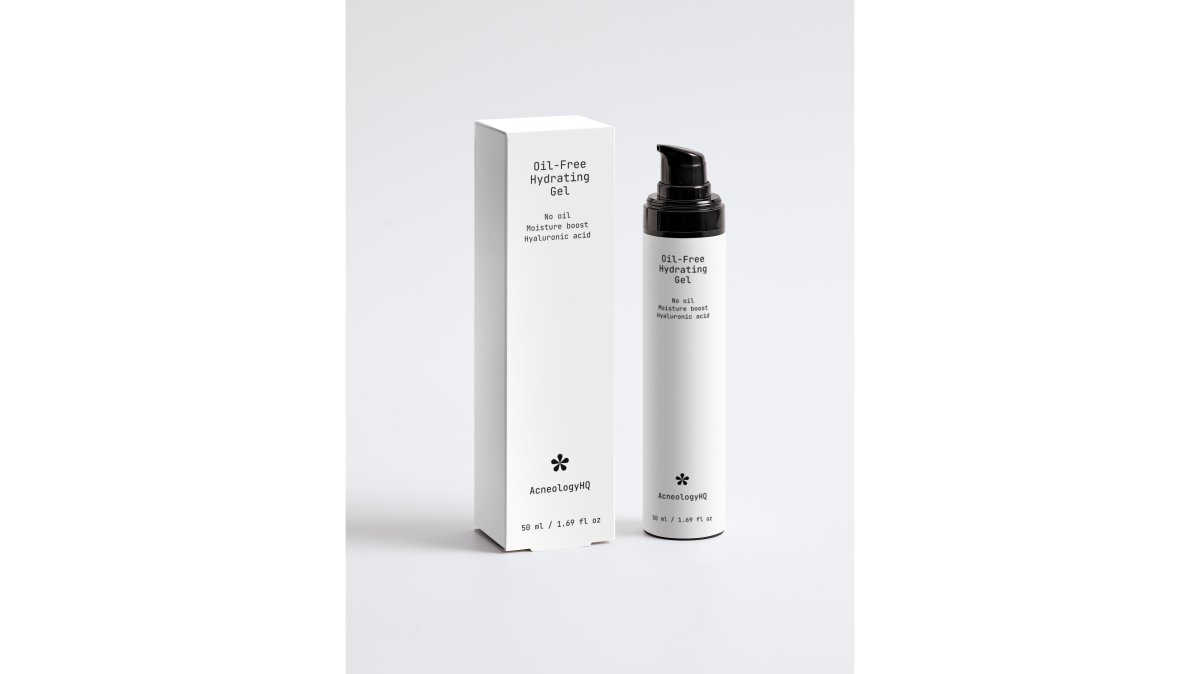
Our Oil-Free Hydrating Gel is the pick for anyone whose skin turns shiny by mid-morning. It uses hyaluronic acid, betaine, and watercress extract for hydration, with organic aloe to calm redness. No oil anywhere in the formula.
What the Formula Does Well
Hyaluronic acid pulls water into the upper layers of skin without adding anything occlusive. Betaine holds that moisture in place. Aloe handles the redness that shows up after a breakout or too many actives.
The texture is a gel, not a cream. It absorbs fast and leaves no film. For oily and combination skin, that difference decides whether you keep using it.
Price and Value
At $39.99, one bottle covers roughly a month of twice-daily use. That is the practical unit to compare, not the sticker price. A cheaper moisturizer you stop using after ten days costs more per month than one you finish.
Purifying Toner: A Supporting Step for Moisturizer for Oily Acne-Prone Skin
A moisturizer for oily acne-prone skin works better when the oil and debris are cleared first. Our Purifying Toner does that job with salicylic acid and organic lavender flower water. It carries no added fragrance.

Salicylic acid is oil-soluble, which is why it reaches inside the pore rather than sitting on the surface. The FDA's consumer information on salicylic acid in skin care confirms it works as a keratolytic, loosening the buildup that blocks pores.
At $29.99, it adds a step and a cost. For oily skin that gets tight after cleansing, that step is worth it.
Clear + Hydrate Duo: Best Value for a Complete Routine
Buying the two products together is cheaper than buying them separately. The Clear + Hydrate Duo pairs one toner with one gel for $59.49, a month's supply of a two-step routine.

One-Month Duo vs. Two-Month Bundle
The Clear + Hydrate Duo Bundle gives you two of each for $111.99, a two-month supply. The math is straightforward:
- Toner alone: $29.99
- Gel alone: $39.99
- One-month Duo: $59.49 (saves $10.49)
If you are still testing whether a routine works, start with the one-month Duo. If you already know two steps suit your skin, the Bundle is the cheaper path.
Noncomedogenic Moisturizer for Acne: What to Look For in Ingredients
A noncomedogenic moisturizer for acne is formulated so its ingredients are unlikely to block pores. The label claim matters less than the ingredient list behind it, and the ingredient list matters less than how the classes of ingredients work together on acne-prone skin.
The four ingredient classes, and what each one does
Moisturizers are built from four functional groups. Knowing which group a product leans on tells you more than any front-of-bottle claim.
- Humectants pull water into the upper layers of skin. Common examples: glycerin, hyaluronic acid, betaine, panthenol, sodium PCA. They are water-soluble, lightweight, and rarely comedogenic. The catch is that in low-humidity conditions they can pull water from deeper skin rather than from the air, which is why they work best applied to damp skin and layered under something that holds the water in.
- Emollients soften and smooth by filling the gaps between skin cells. Common examples: squalane, caprylic/capric triglyceride, dimethicone, jojoba esters, ceramides. Most are well tolerated on acne-prone skin. Heavier plant oils and butters (coconut oil, cocoa butter, wheat germ oil) sit higher on traditional comedogenic scales and are frequent culprits in products marketed as 'soothing.'
- Occlusives slow water loss by forming a film on the surface. Common examples: petrolatum, dimethicone, lanolin, mineral oil. Petrolatum and dimethicone are widely used in acne care and are not inherently pore-clogging, but heavy occlusive layers can feel suffocating on oily skin and can trap sweat and debris.
A well-built moisturizer for acne-prone skin usually leads with humectants, uses a light emollient or dimethicone for slip, and keeps occlusives modest. A poorly built one leads with a heavy oil or butter and calls itself 'nourishing.'
What 'non-comedogenic' actually means
The term is not defined by the FDA and is not a regulated guarantee. It is a marketing claim. The most common reference point is a rabbit-ear comedogenicity scale developed decades ago, which assigns ingredients a 0-5 rating.
A practical takeaway: treat 'non-comedogenic' as a signal that the formulator thought about pore clogging, not as proof that the product will not break you out.
Reading a label in 30 seconds
- Scan the first five ingredients. If water and a humectant (glycerin, hyaluronic acid, betaine) lead, you are in good shape for oily or combination skin.
- Look for heavy oils and butters in the top third. Coconut oil, cocoa butter, wheat germ oil, and isopropyl myristate are the usual suspects.
- Check for fragrance and essential oils if your skin is reactive. 'Fragrance' or 'parfum' near the end of the list is still a fragrance.
- Note the actives. Salicylic acid, niacinamide, and azelaic acid can help; adapalene and benzoyl peroxide can be drying and may need a richer moisturizer on top.
- Ignore the front of the bottle.
The National Center for Biotechnology Information overview of acne and diet notes that diet and hormones both drive sebum production, which is why a topical routine can only do so much on its own.
Moisturizer for Sensitive Acne-Prone Skin: Fragrance, Allergy, and Barrier Support
A moisturizer for sensitive acne-prone skin should have no added fragrance. Fragrance is one of the most common causes of contact irritation, and irritated skin looks a lot like acne: red, bumpy, and angry. The difference matters, because treating irritation like acne (with more actives) usually makes it worse.
Fragrance is not one ingredient
'Fragrance' or 'parfum' on a label can stand for dozens of undeclared compounds. The EU requires disclosure of 26 specific fragrance allergens above certain concentrations; the US does not, so a US label can say 'fragrance' and stop there. If your skin is reactive, the practical move is to avoid the category entirely, including:
- Synthetic fragrance listed as 'fragrance' or 'parfum'
- Essential oils and their components: lavender, citrus peel oils, peppermint, eucalyptus, tea tree, linalool, limonene, citronellol, geraniol, eugenol
- 'Natural' fragrance, the word natural does not mean non-irritating
A product can be genuinely soothing and still trigger a reaction in a fragrance-sensitive user. Aloe and lavender flower water, for example, are well tolerated by most people but are not universally safe.
Patch testing, done properly
A patch test is not a guarantee, but it catches the obvious reactions before they spread across your face.
- Apply a small amount behind one ear or on the inner forearm.
- Leave it for 24 hours without washing the area.
- Check for redness, itching, burning, or small bumps.
- If clear, repeat on a small patch of jawline for 2-3 days before using it on your full face.
- Stop at any point if you react. Do not 'push through' a reaction.
A common pattern is that irritation shows up within minutes to hours (stinging, burning, immediate redness) while a true breakout takes days to weeks to appear. If a product stings on contact, it is irritation, not purging.
Barrier support: what it actually means
The skin barrier is the outermost layer of skin, made of skin cells surrounded by a lipid matrix of ceramides, cholesterol, and fatty acids.
Ingredients that support the barrier fall into a few groups:
- Ceramides, cholesterol, and fatty acids in roughly skin-like ratios help rebuild the lipid matrix.
- Niacinamide supports ceramide production and can reduce redness; it is generally well tolerated but a minority of users report stinging at higher concentrations.
- Panthenol, allantoin, bisabolol, and centella asiatica calm visible redness.
Both our Purifying Toner and Oil-Free Hydrating Gel are made without added fragrance. The gel's aloe and the toner's lavender flower water do the soothing work instead, and both are formulated for reactive skin, but no product is universally safe, which is why patch testing still matters.
A 2025 study in the Journal of Drugs in Dermatology on barrier function and acne reported improved barrier function and skin attributes without worsening acne symptoms.
Moisturizer for Acne Treatment Dryness: When Actives Leave Skin Tight
A moisturizer for acne treatment dryness has one job: put back what your actives take out. Benzoyl peroxide, retinoids, and salicylic acid all strip moisture.
The fix is not to quit the active. It is to add hydration underneath it.
If your skin is still tight and stinging after two weeks of this, the active is too strong or too frequent.
Frequently Asked Questions
What moisturizer is good for acne-prone skin?
Look for a non-comedogenic, oil-free formula that hydrates without clogging pores. Ingredients like hyaluronic acid, ceramides, and aloe deliver moisture without heaviness. A gel or gel-cream texture suits oily and combination skin best, while lotions work for drier types. The Oil-Free Hydrating Gel uses hyaluronic acid, betaine, and watercress extract to hydrate without oil, making it a strong fit for breakout-prone skin.
Should I use moisturizer if I have acne?
Yes. Skipping moisturizer can weaken the skin barrier, triggering more oil production and irritation. Acne treatments like salicylic acid and retinoids strip moisture, so a lightweight, non-comedogenic moisturizer helps skin recover without clogging pores. A 2025 study in the Journal of Drugs in Dermatology found improved barrier function and skin attributes without worsening acne symptoms when using a suitable moisturizer.
Is an oil-free moisturizer better for acne?
Oil-free formulas are generally better for oily and acne-prone skin because they hydrate without adding heavy occlusives that can trap sebum and debris in pores. Gel and water-based textures absorb quickly and leave less residue. That said, some non-comedogenic oils like squalane work for drier skin. The key is checking the label for 'non-comedogenic' and avoiding ingredients known to clog pores.
How long does it take to see clearer skin with a new moisturizer?
Most people notice improved hydration and less tightness within a week. Visible changes in breakouts typically take four to eight weeks, since skin cell turnover follows a roughly 28-day cycle. If you are also using acne actives, allow extra time for your barrier to adjust. Track your skin weekly and stop using any product that causes new, persistent breakouts within the first two weeks.
Can I use moisturizer on fungal acne?
Yes, but choose carefully. Fungal acne (malassezia folliculitis) reacts to certain oils and esters that feed yeast, so look for oil-free, non-comedogenic formulas with simple ingredient lists. Avoid heavy plant oils and fatty acid esters. A lightweight gel with hyaluronic acid and no added fragrance is usually safest. If breakouts persist after four weeks of a simplified routine, see a dermatologist for proper diagnosis.
Persistent acne is frustrating because the answer is rarely one product. It is a routine that hydrates without clogging, controls oil without stripping, and stays gentle enough to use every day. AcneologyHQ™ builds exactly that: physician-curated, non-comedogenic, oil-free formulas with fast-absorbing hydration and real oil control. Start with the Clear + Hydrate Duo, or shop the full line and build the routine your skin can actually keep.
Understanding Acne Ingredients: What Works Best for Acne Control
Exploring the Progression of Acne Care and Effective Acne Control Models
Related Posts

FAQs: Managing Acne-Prone Skin and Preventing Clogged Pores

7 Benefits of Oil-Free Moisturizer for Oily Skin

Best Sebum Control & Shine Banishers for Skin Barrier Repair

Exploring Historical Breakthroughs in Adult Acne Control

A Persuasive Argument for Adopting Acne Safe Practices

How to Moisturize Acne-Prone Skin: A Step-by-Step Guide

What Hormonal Pimples Look Like: A Visual Guide


